Order of the Sinking Star Play Time and Content Scope
Discover the scale of Order of the Sinking Star, including estimated play time, puzzle count, and how its unique world-combining mechanics shape your experience.
Published: Order of the Sinking Star Wiki Editorial Team
Table of Contents
Understanding the Scope of Order of the Sinking Star
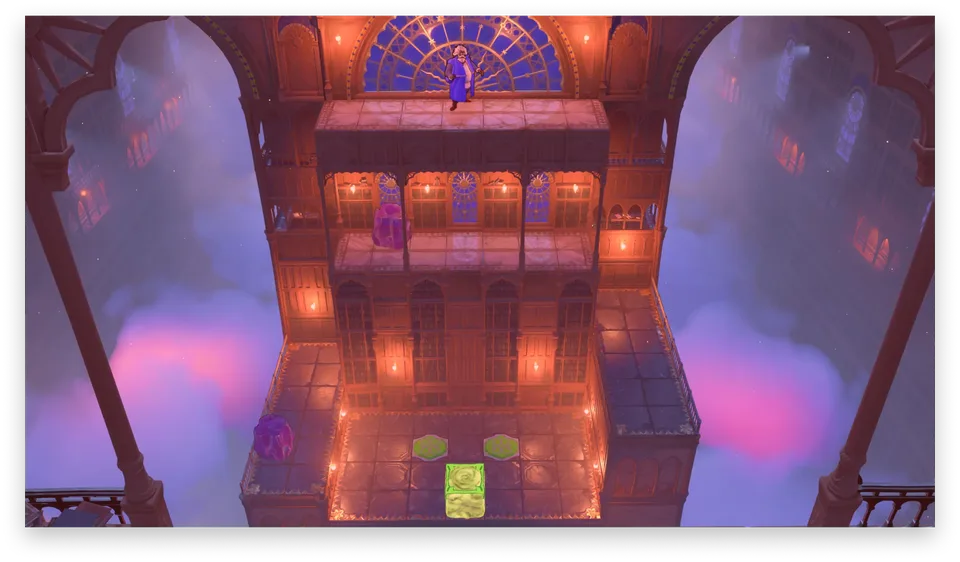
If you are wondering how much time you will spend in Order of the Sinking Star, the answer lies in its massive, interconnected design. Developed by Thekla, Inc. under the direction of Jonathan Blow, the game is built to be an expansive experience rather than a short-term puzzle collection. For dedicated players, the game offers more than 500 hours of potential gameplay, supported by a library of over 1,000 handcrafted puzzles.
The game is designed to be methodical, rewarding those who take the time to observe, experiment, and think through complex rules. Because of this, play time can vary significantly based on your puzzle-solving approach and whether you aim to uncover every secret in the game’s deep, evolving world.
Gameplay Structure and World-Building
Order of the Sinking Star begins as an anthology of four distinct sub-games, each with unique mechanics, characters, and rules. According to official developer insights, these foundational pillars include:
Heroes of Sokoban (by Jonah Ostroff): A fantasy-themed puzzle experience focusing on hero classes and movement mechanics.
Mirror Isles (by Alan Hazelden): A top-down puzzle game centered on swapping places with reflections.
Promesst 1-3 (by Sean Barrett): An abstract grid-based puzzler involving light beams and cavern exploration.
Skipping Stones to Lonely Homes (by Alan Hazelden): A mechanics-heavy game about water traversal and redirecting environmental elements.
The "game design supercollider" approach means that while you start in these separate worlds, they eventually collide. As you progress, the mechanics from these different games begin to interact, creating a vast, combinatoric explosion of possibilities that significantly expands the total play time.
Pacing and Progression Tips
The game is structured to avoid the frustration often associated with difficult puzzles. If you find yourself stuck, you are encouraged to walk away and explore a different area.
Non-Linear Exploration: You can tackle the four initial worlds in any order. If a puzzle in the "North" region feels insurmountable, you can head "East" or "West" to try a completely different type of challenge.
Methodical Thinking: The challenge is based on understanding rules and manipulating them, not on reaction time. Community reports suggest that taking breaks allows for a "fresh perspective," which is often all that is needed to solve a complex sequence.
Persistent Progress: When you leave an area to tackle a different puzzle, the game saves your progress, ensuring you never lose the work you have already completed.
Why the Experience Feels Massive
The sheer volume of content is not just about the number of puzzles; it is about how they build upon each other. As you move deeper into the game, you will find that the rules you learned in one environment start to affect the others.
Tip
Do not be discouraged by initial confusion. The game is designed to let you be confused for a while, providing the necessary tools to experiment and learn through observation rather than explicit tutorials.
According to player experience and developer statements, the "one more puzzle" quality of the game makes it suitable for both short bursts of play and long, immersive sessions. Even after reaching the credits, there is additional content waiting for those who wish to continue exploring the mysteries of the Order.