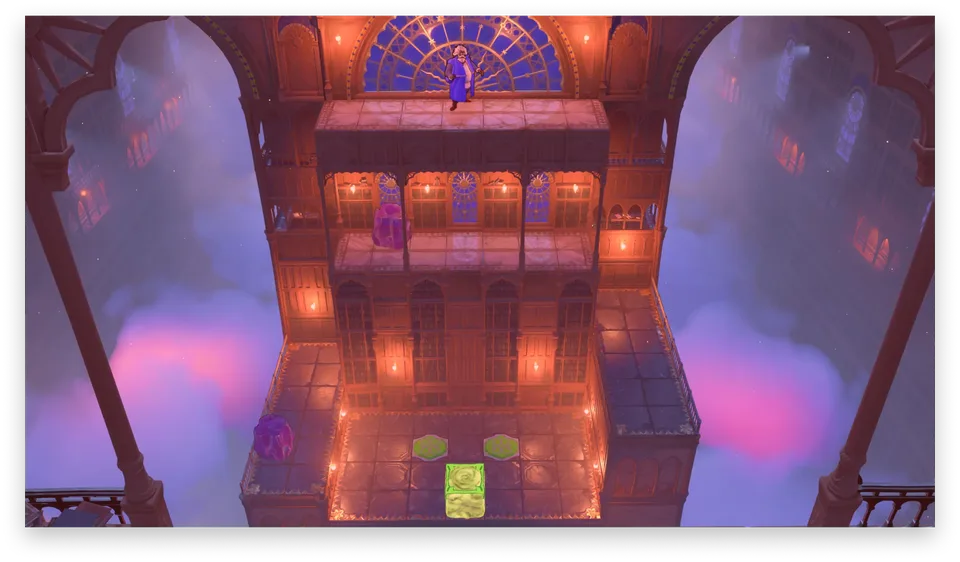
Order of the Sinking Star Guide: Gameplay Mechanics and Puzzle Tips
Master the complex puzzle mechanics of Order of the Sinking Star with our guide covering hero abilities, world navigation, and essential problem-solving strategies.
Published: Order of the Sinking Star Wiki Editorial Team
Table of Contents
Understanding the Puzzle Structure
Order of the Sinking Star is designed as a "game design supercollider," blending mechanics from foundational puzzle games into a massive, interconnected experience. Unlike linear puzzle titles, this game features an overworld map where you must determine how to access various self-contained levels.
According to community reports and previews, the game is divided into four distinct worlds. Each world introduces specific movement and interaction rules, such as:
Heroes of Hauling (North): Focuses on managing multiple characters simultaneously, each with unique capabilities like pushing or pulling blocks.
Mirror Isles (East): Features a single-character setup where you use magic mirrors to warp and create copies of yourself.
The Promise (West): Utilizes complex, infinitely looping screens that stitch multiple puzzle areas together.
The game’s true challenge lies in how these mechanics eventually collide. While early stages allow you to master one concept at a time, later levels require combining these disparate logic systems to solve grander mysteries.
Essential Gameplay Tips for Success
When navigating the game's various environments, keep these strategies in mind to avoid common pitfalls:
Master Individual Abilities: Don't rush to the complex puzzles. In areas like the Heroes of Hauling, spend time learning the specific limitations of each character. Some can push, while others are better suited for pulling or teleportation. Misusing a character's primary skill often leads to a dead end.
Utilize the Undo Feature: If you find yourself stuck or have accidentally blocked your path, use the game’s built-in undo mechanic (typically mapped to the triangle button on gamepads). This allows you to revert to a solvable state without having to restart the entire level.
Observe the Environment: The game often hides clues in plain sight. If a puzzle seems impossible, look for patterns in the wall glyphs or the arrangement of the "odd-shapen" quartz. The world is built to be explored, and the overworld itself often functions as a large-scale puzzle.
Manage Energy Gates: In many areas, you will encounter energy gates that block your path. These are often tied to specific puzzle solutions—if you are struggling, look for nearby objects or blocks that can be manipulated to redirect the energy flow.
Navigating the Overworld
The overworld is more than just a level-select screen; it is an integrated part of the game's narrative. Players have noted that secrets are often tucked away just out of reach, encouraging you to return to earlier areas once you have mastered new mechanics in later worlds.
Tip
Don't Ignore the Narrative Context: Pay attention to the voice-over and written lore found on plaques. The dialogue often hints at the "why" behind the puzzle mechanics, helping you understand the intent of the architect who built these chambers.
If you find yourself overwhelmed, try focusing on one quadrant of the map at a time. The game is intentionally designed to be vast, and attempting to solve every mystery simultaneously can lead to confusion. Focus on clearing one world's core mechanics before moving to the next.
Official Resources and Further Information
For the latest news, updates, and community discussions, you can visit the official Order of the Sinking Star website. This is the most reliable source for information regarding game updates, platform-specific releases, and developer insights from Thekla, Inc.
As the game approaches its release on Steam, ensure you keep your client updated. Because the game features non-traditional puzzle design, community forums and official newsletters are excellent places to share findings and discuss the game’s grander mysteries without spoiling the experience for others.